How it started
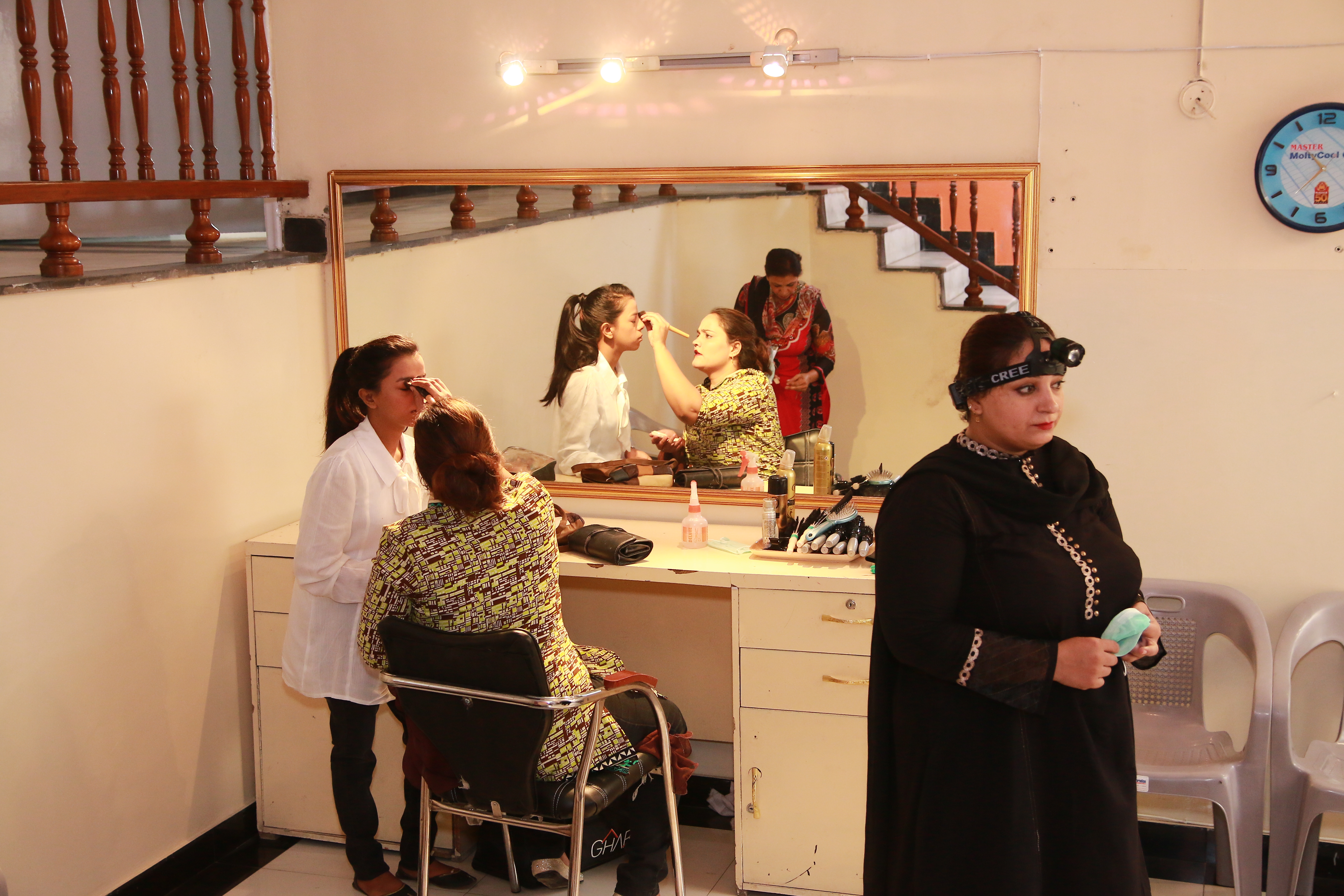
Arooj Ismail is the co-founder of GharPar Tech Private Limited, a mobile app and online booking platform that connects beauticians with clients for at-home beauty services, including hair styling, makeup, and massages.
Based in Lahore, Pakistan, the company targets affluent women customers for beauty services, but its core mission is to transform the lives of the beauticians that join its platform. These women are skilled but often illiterate, come from low-income backgrounds, and face exploitative labor practices inherent in Pakistan’s beauty industry.
Through GharPar’s platform, beauticians earn a montlhy average of six times more than they would working at a typical salon, increasing their monthly incomes from $60 to $360, with the highest earners on the platform reaching twice that amount.
“These women are coming from abject poverty and entering into the middle class,” says Arooj. “The health of their families is better, their kids are in school now. They also have more ownership and flexibility. They can work on their own terms, rather than working in a salon from 9:00 a.m. to 9:00 p.m. in exploitative conditions.”
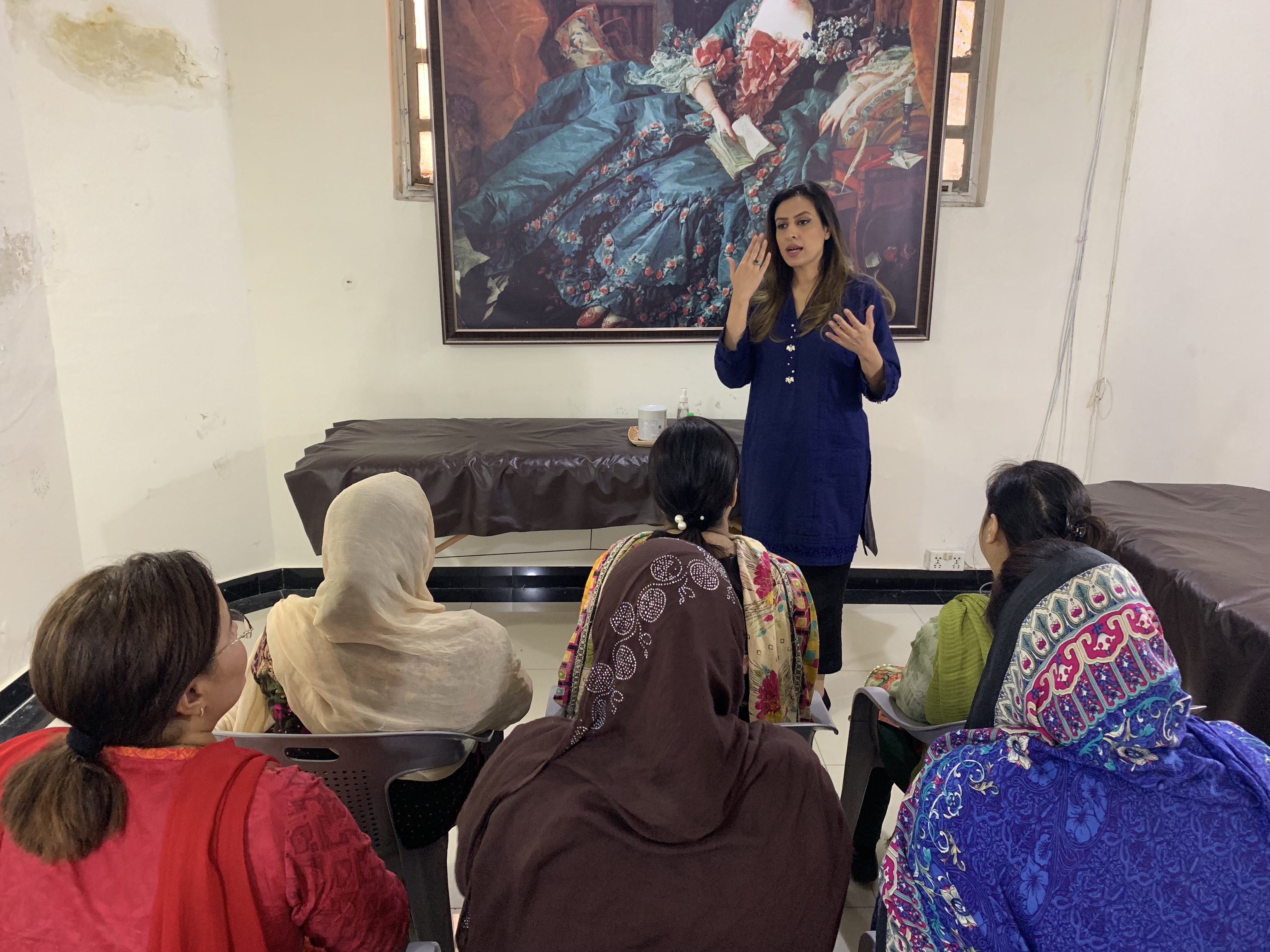
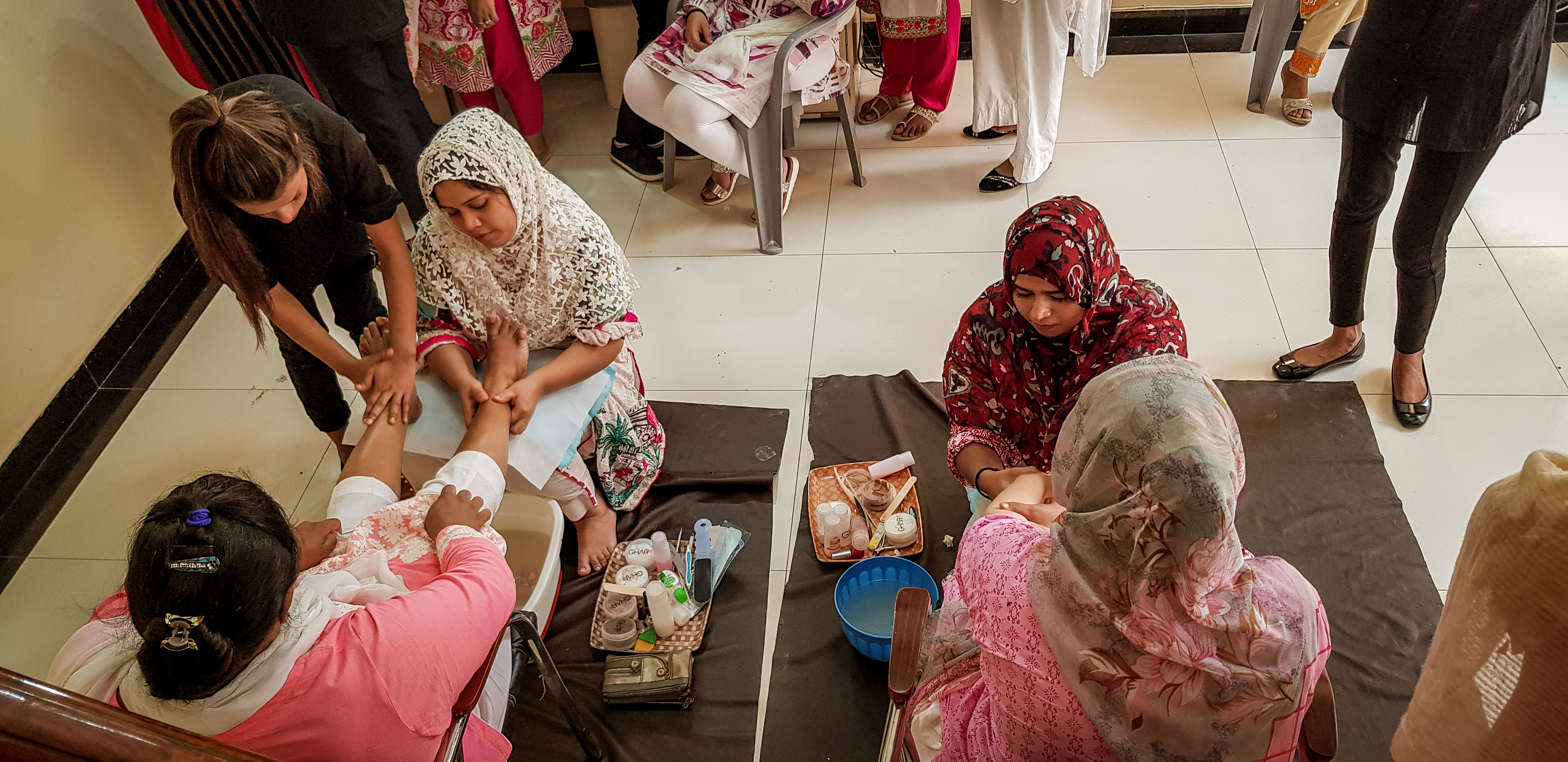
Before beauticians can be active on GharPar’s platform, they must complete a specially designed training program. GharPar streamlines beautician training with an intensive 10-week program—far shorter than traditional year-long vocational courses—and focuses on cost-effective services by excluding complex, high-cost treatments like chemical hair straightening. As a result, its beauty services are 20% more affordable than those at mid-tier salons.
“We thought, how can we capture the masses, as opposed to a small niche?” says Arooj. “We decided that we’re not going to specialize in beauty services—we’re going to essentially become a ‘painkiller.’ We would provide all the beauty services that you require on a monthly basis, and it would be of good quality. But we wouldn’t provide, for example, balayage or hair extensions, because the training required for that is very high.”
As GharPar gained media recognition, other companies began copying its business model.
“In Islamabad, a company was founded with the name GharPe. Our clients thought GharPar had already expanded to Islamabad because the company was using our name to gain credibility in the market. That became a fear—what if they grab a lot of market share in Islamabad? If they didn’t provide the same level of service, once we did expand, we would have a lot of trouble in gaining that market back.”
Threatened by such imitators, GharPar hurriedly expanded into Islamabad, but the social enterprise quickly learned that it could not simply “cut-and-paste” its model. “We thought the Lahore model would work in Islamabad. But we didn’t understand the environment and labor economics.”
GharPar scaled too early and failed to understand the unique dynamics of the Islamabad market before entering. This “bad scale” led to a series of challenges the company had to overcome. In order to win customers and beauticians in the Islamabad market, GharPar created customer awareness, realigned its strategic advantage, and made their services affordable and accessible to new users. The company also learned hard lessons for how to set itself up for successful scale in future markets.
Good scale: When your business adds more clients and revenue without adding significant costs, so your financial margins keep expanding and you can reach more and more people with your solution.
Bad scale: When rapid expansion compromises the financial sustainability of your enterprise, and uncontrolled spending or operational inefficiencies stop you from becoming profitable despite increased revenue or customer numbers.
→ Think about your own business. What does profitable and sustainable scale look like for you? What actions could lead you to fall into bad scale?
The problem
In Pakistan’s labor market, service workers from low-income backgrounds face exploitative labor practices, limited income, and a lack of opportunities to upskill effectively.
The solution
GharPar is a social enterprise with a mobile app that connects skilled beauticians with affluent clients seeking at-home beauty services. The app provides quick, focused upskilling and significantly improves beauticians' earning potential and work conditions.
GharPar started in Lahore. Its success in this market led others to imitate and attempt to replicate the GharPar model, particularly in the city of Islamabad.
GharPar made the haste decision to expand into Islamabad out of fear of losing credibility and competitive advantage in potential future markets.
Why it matters
GharPar’s business model increases women’s autonomy through access to better incomes, enabling them to move out of poverty and improve their families’ well-being. However, hurried attempts to enter a new market led to insufficient market research and several mistakes that the organization later needed to pivot away from.
→ By learning from GharPar’s experience, other social entrepreneurs can take a more measured and sustainable approach to entering new markets.
GharPar’s lessons from “bad scale”
As a result of “bad scale,” GharPar’s expansion into the city of Islamabad introduced several unanticipated challenges for the company.
Awareness & advantage need to be developed in new markets
When entering the Islamabad market, GharPar underestimated the importance of brand awareness and credibility to scale effectively and failed to recognize the cultural differences between Lahore and Islamabad, which influence how individuals would perceive the brand in the new market.
“We didn’t anticipate how difficult it would be to train people in Islamabad or to get beauticians to join the platform,” says Arooj. “In Lahore, we had gained a level of credibility, so people came to us through word of mouth. But in Islamabad, we seemed too good to be true. This is a conservative society, and often, the at-home beauty industry and massage are associated with prostitution. People would think, ‘how is it possible to make so much money?’”
In Islamabad, these cultural differences made it difficult for GharPar to retain beauticians. Arooj explains: “We had a few attrition challenges because in the Lahore market, the beauticians were the breadwinners of the family. In Islamabad, the husbands were the main breadwinners, so the women didn’t feel a need to stay on the platform for long.”
“For our first batch of beauticians, after we had trained them for a year, everyone left. None of them stuck to the platform. That meant we had to start all over again.”
Affordability & access assessments need to be conducted for new markets
Upon entering the Islamabad market, GharPar found that customers in the new market were not willing to pay the same prices as those in Lahore, a comparatively affluent city. This pricing challenge was coupled with new additional costs GharPar did not anticipate when entering the new market.
In Lahore, GharPar was able to keep its overhead costs to an absolute minimum. The social enterprise had only four employees at the time who did not draw a salary and performed all functions of running the business themselves, including operating in a co-founder’s basement rent-free. Arooj explains:
“We weren’t yet profitable in Lahore, and expanding to Islamabad increased our expenditures and overheads substantially (...) In Lahore, we had certain privileges—we were still working from home. But Islamabad has different zoning laws. Because we had a training component to our business, we needed to rent a building or small commercial area, and commercial rates are exorbitant.”
Before long, GharPar was paying more in rent than it was earning in Islamabad. The team continued bootstrapping, putting more of their own money into the business.
In addition to facing substantially unexpected overhead costs, upon entering the new market, GharPar realized they had no formal way for customers to access after-sales service or provide valuable feedback. This became especially important in a new market, where GharPar needed to understand customer needs and preferences in order to build customer loyalty and trust, and tailor services to fit the unique needs of these new customers.
The challenges and lessons GharPar faced upon entering the Islamabad market drove tensions across the team, leading them to implement a series of strategies that could help pull them out of bad scale.
What Ghar Par team thought will happen (based on experience in Lahore) | Reality in Islamabad | |
|---|---|---|
Brand awareness | Word-of-mouth and credibility would carry over | People didn’t trust the brand |
Culture fit | Islamabad customers would have a similar mindset to those in Lahore | Conservative norms led to misconceptions about at-home beauty services |
Beauticians | Beauticians would stay loyal like in Lahore | Many left because they didn’t rely on the income as much |
Pricing | Customers would pay similar prices | Customers were unwilling to pay as much |
Costs | They could keep expenses low like in Lahore | High rent and zoning laws drove up costs |
The tensions of scaling, and bouncing back from “bad scale”
For the GharPar team, taking the leap to expand into new cities brought frustration, disagreements among co-founders, and financial hardship. But they remained determined to achieve the impact that Arooj and her teammates desired, it was essential to keep working until they got it right. Arooj explains:
“When you’re a small company, you have more control and unity (...) You don’t have to constantly manage polarities [trade-offs]. But if your mission is to empower women and give them financial independence, you have to scale. We want to see transformative change in our lifetimes.”
Despite these tensions, the team got to work building strategies to dig themselves out of bad scale, and into a profitable and scaling enterprise.
Creating brand awareness & affordability for customers
Discovering that Islamabad was a more price sensitive city, the team focused on building brand awareness and ensured affordably from those who could pay. Arooj says:
“The first thing we did was zone Islamabad into smaller areas, rather than try to expand throughout the entire city (...) We focused on the most affluent areas and tried to get more demand from those places.”
The team experimented with sales and promotion codes to drive up demand. They also partnered with social media influencers and bloggers, an inexpensive strategy that helped build awareness of the brand.
Boosting advantage & compatibility with beauticians
Initially, GharPar operated on a 70–30 revenue-sharing model with beauticians, with the majority of profits going to the beauticians. But as they expanded into new markets, they realized beauticians were leaving the platform because there was no room for them to progress. Arooj explains:
“Seventy percent was both the minimum and the maximum that you could earn (...) We realized that was disincentivizing their growth. If beauticians were leaving the platform, how could we grow the business?”
GharPar adjusted its payment structure to incentivize beauticians in new markets to join and stay on the platform.
“We changed our approach so that beauticians would start out with 60–40. We created a ladder of growth with the potential to reach 70. As a result, beauticians feel motivated to provide services that are of good quality, four or five stars, or else it will hinder their growth up the commission ladder. It’s also a retention strategy for us: women will stay on the platform longer, rather than receiving the training and churning out.”
Improving customer access through data and research
Eventually, as the number of clients and orders steadily increased in Islamabad, the team decided they were ready for further expansion. They dove into market research and discovered that 70% of middle-to-upper-income women already used at-home waxing services. “We decided that waxing would become our ‘cash cow’ and the way we create brand presence in new cities,” says Arooj.
Before entering a new city, GharPar would train five to six beauticians on waxing exclusively. Then it would target customers in the most affluent areas, rather than throughout the city as a whole, which helped the company create a foothold.
“After about three months, we would ask our clients: What service do you want next? Each city had a different response—some preferred facials, others makeup. In this way, we responded directly to customer demand.”
By introducing one service at a time, GharPar ensured that beauticians were efficiently trained, and the company did not waste money on inventory. Moreover, by listening to its customers’ preferences, GharPar gained customer loyalty and trust.
→ All in all, this series of implemented strategies proved to be highly effective, and with time, GharPar began to see changes in customer behavior, customer satisfaction, and growth in the company’s financial margins. This all signaled readiness for their next stage of expansion.
What Ghar Par tried in Islamabad | Key takeaway for the future | |
|---|---|---|
Brand awareness | Focused on affluent areas, used social media influencers, and ran promotions to build trust | Build a recognizable brand through consistent messaging and local partnerships in each new market. |
Culture fit | Took into account local cultural norms and addressed misconceptions about their services through clear messaging. | Develop culturally sensitive strategies to address unique market dynamics and customer expectations. |
Beauticians | Revised the revenue-sharing model to provide growth opportunities and incentivize retention. | Create scalable career pathways and training programs to retain beauticians and improve service quality. |
Pricing | Adjusted pricing strategies to match the market’s affordability while offering value through promotions. | Maintain sustainable margins while ensuring accessibility for customers in new markets. |
Costs | Strategically zoned expansion areas to manage overheads and prevent excessive spending. | Optimize operations to scale efficiently in domestic and international markets. |
Review the list below of GharPar’s strategies to bounce back from bad scale. As you consider scaling your own business into new markets: what challenges and strategies resonate with you? How would you go about implementing them?
Experiment with sales and promotion codes to drive up demand
Adopt a social media strategy to build brand awareness
Adapt payment structures to be more appealing to new customers
Target customers who can pay in order to establish a foothold
Design access to feedback loops to learn the preferences of new customers
Collect data and research to understand customers in new markets
Good scale. Great impact
GharPar is now operating in six cities with 100,000 app downloads. With over 200 beauticians on the platform, GharPar's impact extends to nearly 2,000 people, as each beautician supports an average household of 10.
“We’re working toward global expansion,” says Arooj. “Countries like Bangladesh, Sri Lanka, and India have similar labor economics to Pakistan. Our aim is to be a household name for anything that women require at home. Whether related to illness, tailoring, or tutors, we want to expand into those verticals.” But as Arooj looks ahead to further scaling, she is embracing a mentality for good scale:
“After our experience in Islamabad, whenever we talked about scaling, our CFO would say, ‘What is the data? We’re not making any more mistakes!’”
GharPar’s journey illustrates lessons and tensions shared by social entrepreneurs across sectors and geographies.
“Whether you are in the beauty space or the agri space, the number one question is: Are your customers happy?” Arooj says. “Are you getting data? Are you using this data to make informed decisions? What is your churn rate? What is your client acquisition rate? What is the lifetime value of your client?”
“The scale or the model may differ, but at the end of the day, you’re serving customers. You can learn from someone whether they are selling vegetables or lingerie.”
Key takeaways
Research first, expand later: Expanding without understanding local customer behavior, economic dynamics, and societal perceptions can lead to "bad scale," which is costly and reputationally damaging. Conduct in-depth research to assess demand, willingness to pay, and cultural norms before scaling.
Don’t rush growth: For a social enterprise, scaling too quickly - especially out of fear of competition - can result in financial strain and operational setbacks. Building a strong foundation in the initial market before expanding is essential to avoid overextending resources and burning through capital.
Let data guide you: For a social enterprise, using data to guide decisions is key to scaling. GharPar adapted by focusing on high-demand areas and tailoring services based on customer feedback, which helped rebuild trust and align with market needs. Using data ensures sustainable growth and minimizes costs.